6 Kitchen Design Trends from New Products Coming in 2021

Whether you’re selling, buying, or looking for ways to increase your ROI on a property, these new products this year will influence kitchen design. These products come from the virtual 2021 Kitchen & Bath Industry Show. Here are the ten kitchen design trends and the products that affect them. 

Engineered Countertops and Backsplashes

1. Light-colored marble looks

Light colors are in because they give a sense of cleanliness and optimism compared to dark colors. And this desire is sticking this year, which is why you’ll see many new collections focused on warm, welcoming whites with marble looks dominating. 

2. Concrete and other worn looks

In new engineered-surface collections, concrete-look and other worm styles showed up frequently. Inspiration for one collection was taken from industrial-style dwellings found in New York, Detroit, and London. 

Faucets

3. Touchless

Touchless appliances are taking off since people are now more than ever about how germs spread from surface to surface. Many faucet manufacturers are adapting and integrating a touchless option as a standard in their new lines. Some are even making it available in older styles. 

One style by Kohler is a voice-activated faucet. It can sync with Amazon Alexa, Google Home, or Apple HomeKit devices and can be controlled by voice commands. Most styles need a wave of a hand to activate the faucet. For those with voice commands, you can set up preferences in an app for temperature and the amount, and the faucet will fulfill the demand. 

4. Two-tone finishes

To find harmony in dark and light, two-tone finishes were the balancing solution. Many products balance rough and smooth textures, matte and polished finishes, and warm and cool tones. This trend doesn’t just apply to faucets either. Many appliances are also following a similar finish. 

Rohl’s new line of kitchen faucets allows for mixing and matching four finished for the spout, four finishes for the inner knob, and six finished for the outer ring for the knob. Several other companies now offer the stylish matte black and brass tow-tone combination. 

Appliances

5. Slim appliances

Several manufactures released a new line intended for small homes and apartments, rental properties, and empty nesters or retirees who have downsized. Miele’s new dishwasher offers a quick wash-and-dry option that only takes 58 minutes. Thor introduced a 24-inch-wide gas range oven and stove. Fisher & Paykel’s released a new 24-inch refrigerator with a bottom-mount freezer as a skinny solution. 

Cabinet Storage

6. Drawer and cabinet organizers

People have utilized inserts, rollouts, pullouts, and dedicated dividers in their drawers and cabinets, and manufacturers have noticed. Hardware Resources created a pullout with a magnetic knife storage insert. Wellborn Cabinet utilizes the pull-down option, allowing users to bring items in upper cabinets down to a reachable level. You grip the handle and pull for the shelves to swing out and down for access. 


If you need help implementing these technologies and products in your home or want advice on how it will impact your home value, contact me so we can get started! Reach out to TALK Property Management– We are here to help: (512) 721-1094 or dbrown@talkpropertymanagement.com.


Important Factors to Consider When Buying a Foreclosed Home

Foreclosures are often the investors’ go-to’s when they’re seeking a bargain-priced home or wanting to flip a house. And while they’re a solid option, foreclosed homes are very different from traditional resale homes. Let’s take a look at some of the important factors to consider when buying a foreclosed home.

The Dangers of Foreclosed Homes

While foreclosed homes can save you money, they come with baggage. Most foreclosures were not cared for properly and will require some work before becoming livable or sellable. This is common with vacant and abandoned homes, which makes up almost all foreclosed homes since the pandemic began. 

Foreclosures are sold “as-is,” meaning that the owner of the property will not perform any repairs on the property. Another challenge could be the legality tied up into the property. Sometimes foreclosure properties have liens or judgments filed against them. This is a claim for the home due to unpaid taxes, repair bills, and more. When that’s the case, you’ll need to pay these off before buying the house. 

How To Get A Good Deal

If you find a foreclosure property that catches your eye, here’s what you need to do next.

1. Get Pre-Approved for a Mortgage

Unless you have an all-cash offer for the seller, getting pre-approved is a crucial first step. All cash offers are appealing because they usually mean a quick close. 

A loan pre-approval letter shows the seller you’re qualified, prepared, and are a safe bet to follow through on the deal. As your real estate agent, I have a list of reputable lenders, and I’m happy to share that information with you.

2. Research

You’ll need to research the home and the area. You can investigate the house through property records found at the county clerk’s office, and you may be able to avoid paying for liens placed against the property. You’ll also want to look for any improvements to the home, its ownership and sales history, and its assessed value with the county.

3. Get a Home Inspection

A home inspection will help you better understand the property and its flaws. As your real estate agent, I can also help with evaluating the property. 

Once you have more information about the property, work backward to come up with an offer price. The rule of thumb for home flippers is purchase and repair costs should not exceed 70% of the home’s expected after-repair value. 


This is just the tip of the iceberg, and there are many more important factors to consider when purchasing a foreclosed home. Contact us today, and we’ll happily guide you through the process: (512) 721-1094 or dbrown@talkpropertymanagement.com.


Home Design, Return on Investment, Austin Investor, Austin Real Estate, Austin Property Management

How To Open Spaces with Glass

When you think of glass in a house, you think luxury, modern, and clean. Some other mental images are natural light and views. But whether you know it or not, glass is a material that can transform a home. Here is how to use it to open up your indoor and outdoor spaces. 

Stairway

A glass stairway helps emphasize the interior architecture and unblocks sightlines. A clear, low iron glass creates a more spacious look. Low iron will remove the greenish tint you sometimes see in clear glass. The popular style is a frame with posts framing the glass infill. For indoor staircases, standoff pins are a fantastic high design frameless look.

Interior balconies

Balconies made of glass will help create an open, airy effect as the scenery can enter the home and be seen from anywhere. It will also remove dark, separated areas with its influx of natural light. Talon spigots are a good option for glass railings to create an uninterrupted view. Another option is a slim stainless steel top rail. 

Exterior balconies

Exterior balconies create a picture-perfect view of nature. With no interruptions, it’s a great option that also blocks wind. If the clear glass is too vulnerable, frosted glass is a good option too. 

Guardrails

If there are guardrails inside the home, help open the floorplan with glass. The glass will enhance the room’s width and openness. It also creates a modern look. Laminated glass is a good option if you want a frameless option as there are layers of glass. 


If you’re ready to renovate to glass and get the highest return on investment, contact me so we can get started! Reach out to TALK Property Management– We are here to help: (512) 721-1094 or dbrown@talkpropertymanagement.com.

The Top Kitchen Trends of 2021

With a significant amount of time spent inside over the last year, homeowners are more discerning when it comes to kitchen preferences. In fact, Houzz surveyed over 2,000 U.S. homeowners to see what projects they’re tackling in their kitchens this year. So, if you’re looking to revamp your kitchen, these ideas make the cut! 

COVID-19 Trends

Storage

94% of surveyed homeowners said storage was their priority. They’re expanding their storage by replacing their kitchen cabinets (63%). And those who did a partial cabinet upgrade (31%), almost 30% of them added cabinets to their newly renovated kitchen. This is four times the amount compared to last year! For those who partially replaced cabinets, the number one improvement was refinishing the exterior (60%), then adding cabinets (28%). 

Pantries

46% said they are adding or upgrading their pantry to include more space. This is up by 3%. There’s also an increase in walk-in panties by 3%. 

Changes in Open Layouts

Open-concept was a popular layout in the past, but it has decreased by 10% compared to 2019’s percentage of 53%. People are no longer wanting to renovate their open-floor plan by opening up their kitchen to other interior spaces. 

Outdoor Connection

One in 5 homeowners wants to open the kitchen to an outdoor space. 22% of homeowners are more open to outdoors, with the majority choosing to open via double doors or having a row of doors.  

Design

Backsplashes Extended

Homeowners are increasing their backsplash to include from the countertop all the way to the upper cabinets or range hood (68%). White is still the number one choice for a backsplash color (37%). Still, multicolored is second. 54% of homeowners chose ceramic or porcelain tiles are their preferred material. 

Flooring 

Ceramic or porcelain tile ranked number one for flooring (24%). Hardwood is second at 23%, and vinyl continues to grow in popularity at 19%, which is 6% higher than the previous year. The top flooring color for renovated kitchens was wood at 51%. The second place was gray (14%) and beige at third (10%). 

Island Cabinet Colors

Almost half of homeowners renovated their kitchen to have a different color island cabinet from the rest of the kitchen to make it pop (41%). The top color choices are blue and gray for their contrasting island cabinets. 

55% of homeowners chose to add an island or upgrade their current island. The popular layout choice is to add an island to create an L-shaped layout (38%). 

High Tech Faucets

Many homeowners want high technology in their kitchen, and a faucet is one of them. More than half of upgraded faucets have high-tech features. 26% claimed to be water-efficient, 22% said there’s a no-fingerprint coating, and 21% are touch-free activation. 

Neutral Colors

Gray, white, and beige colors continue to dominate in the kitchen. But a small percentage wants to mix it up by including blue walls (7%), gray flooring (14%), colorful backsplashes (18%), and black appliances (16%). 

Why They Remodeled

In this survey, Houzz also asked why they decided to remodel. The majority said they’ve wanted to do it all along, and now they finally have the means to do so (40%). 35% said they could no longer stand the old kitchen and 30% said their old kitchen was deteriorating or broken down. 28% said they wanted to personalize their newly purchased home, and 14% were inspired to change certain items. 

The most popular renovation was countertops at 88%. The second was backsplash at 83%, and the third is 80%. Other popular renovations were faucets (78%), light fixtures (74%), flooring (65%), all appliances (51%), wall finish (46%), some appliances (33%), windows (28%), exterior doors (19%), interior doors (17%), and electronics (10%). Upgrades to light fixtures, appliances, wall finishes, and interior doors decreased compared to last year. 

When changing the kitchen layout, 44% opted to change the kitchen layout: 38% and 34% upgraded systems and modified walls. Al little more than two-thirds kept their kitchen the same size, where almost 30% opted for larger. Over a quarter opted to make it up 50% larger, and 7% chose more than 50%. 200 square feet or more accounted for the renovated kitchen’s final size for 51% of homeowners. 

After their kitchen renovations, 97% reported their number one activity is cooking. Dining and eating are second at 70%, a tie with 2020’s percentage. Third place was baking at 69% (remember all the bread we baked at the beginning of 2020?). Besides cooking and baking, the top activities after their kitchen renovation were eating and dining (52%) and entertaining (50%).  

As we can see from the data, homeowners want a space with a closed layout to personalize. If you need help deciding what home designs increase your rental property’s ROI, reach out to TALK Property Management– We are here to help: (512) 721-1094 or dbrown@talkpropertymanagement.com.


4 Timely Home Design Trends for Rental Property in 2021

If 2021 is the year you become an investor, or if you’re already one and looking for ways to increase ROI on your investment, these four home designs should factor into your portfolio decisions in 2021. With the pandemic, people are spending significantly more time at home, and this influences home layout preferences and needs. Here are some home design trends you should look for in your next rental property.

Separated Spaces for Multigen

Open floor plans are not as popular if multiple people are sharing the same living space. Homeowners are looking for areas to do work, place video calls, exercise, and learn remotely, and you can’t do that all in one room. Think of the chaos! This is especially true with the rise in multigenerational families sharing a home, where each individual needs space and privacy for themselves. 

Wood-grain Elements in the Kitchen

Increased time spent indoors is influencing home materials. Homeowners are craving the outdoors indoors, and this includes materials that are organic and natural. This home design ties interior elements to nature and can be accomplished by adding wood-grain cabinets and wood countertops. 

Outdoor Solitude

The backyard has become a break room of sorts for adults and children, so homeowners are looking for entertainment. The items that gained popularity during the pandemic are fireplaces, fire pits, patios and decks, screened-in porches, and outdoor kitchens. While an outdoor kitchen can be expensive, it can be as economical as adding an outdoor refrigerators and dining areas to your rental property. 

Smarter Bathrooms 

Touchless appliances and self-cleaning appliances gained traction last year in smart technology. Motion sensors for lighting and smart temperature control for bathroom floors are some ideas that can increase ROI.


Contact us today to begin your investor journey. If you need help deciding what home designs increase your rental property’s ROI, reach out to TALK Property Management– We are here to help: (512) 721-1094 or dbrown@talkpropertymanagement.com.

The 5 Ways Your Finances Change After Buying A House

Being a homeowner or investor is more than just having equity and a place to call home. It changes your life physically, emotionally, and financially. Before buying a house, make sure you’re ready for these five financial changes. 

1. Your credit score will drop.

Once you get a mortgage, your credit score can drop 10 to 40 points, so don’t be alarmed. You’re taking on a lot of debt, so that’s why it falls. But the drop is temporary. One study from LendingTree discovered it takes about nine months for your credit score to recover. Once it improves, paying your mortgage on time each month will boost your score. 

2. You have more costs.

Compared to renting, your costs will seem like a lot, especially when there are costs that new homeowners forget or didn’t consider. Some of these costs include pest control, lawn maintenance, HVAC maintenance, taxes, and possible HOA dues. Utilities will also increase if your new home has more square footage than your last place, and you’ll need new insurance coverage. 

3. Savings is important.

Unexpected expenses like repairs and breakdowns are common homeowner problems and aren’t always budgeted for initially. This is why a savings or an emergency fund is crucial. Get ahead of the game by saving three to six months’ worth of expenses. This should include your mortgage payment, utilities, and other regular bills. 

4. Late payments don’t exist.

One late payment is a catastrophic avalanche of severe consequences. Most lenders have a two week grace period, but if it’s not paid by then, you’ll get charged a late fee. The late payment will also hurt your credit score. If you hit three months of being behind on a mortgage, the lender can foreclose your home.

To avoid this, create a monthly budget or take advantage of the several applications that can help you budget. You can also start automatic payments or monthly reminders, so you don’t miss a payment. If you do miss a payment, contact your lender immediately and ask for a goodwill gesture of removing the late payment from your credit report. You might be surprised by people’s kindness over a mistake. 

5. New tax benefits

As a homeowner, you’ll get a new tax deduction compared to when you were a renter. Your real estate taxes and mortgage interest could create tax savings for you later. Especially as a new homeowner, it’s essential to talk to a professional to see if you can maximize your deductions and hopefully get more cash.


If you’re ready for these five financial changes to your life, then contact me today to begin your home buying journey. We are here to help–(512) 721-1094 or dbrown@talkpropertymanagement.com. 

7-Day Plan For an Organized Home Office

7-Day Plan For an Organized Home Office

The new year is almost here, but you don’t have to wait until it’s 2021 to change! Start the new year with an organized home office. With sudden changes in shutdowns and everything else that 2020 has brought, working from home might not have been in your original plan. Now is the perfect time to finish this year strong and start 2021 with an organized home office.

While this is written as a 7-day plan, the time required may vary, depending on your home office size and organizational needs.

Day One: Paper

Get your recycling can out and get ready to declutter the paper on your desk. Don’t feel defeated if your desk initially looks messier than when you started. It’s part of the organizational process! 

Ask yourself, “Do I need to keep this?” Sometimes we keep things because we’re unsure of how long we need to keep them. So, this step might require some additional research to discover what to keep and for how long. 

Once you’ve answered that question, it’s time to sort and stack paperwork. Use quick, temporary labels for your categories as you work. If you have documents that don’t belong in your office, return them to where they belong immediately. 

Day Two: Space

Day two is for increasing available space. With your now newly stacked and organized paperwork, review it once more to remove duplicates. Consider scanning the documents to the cloud–if you haven’t become a paperless home office yet, today is an ideal day to make the switch!

Day Three: Organize

Day three is all about discovering an organizational system that works for you. Some ideas are clipboards on the wall, wall-mounted cups containing office supplies, labeled, open-top baskets on shelves, or traditional files.

Day Four: Clean

Now that everything has a home and is organized (the hardest part!), it’s time to clean so your office is a more pleasant place in which to spend time. Cleaning tasks typically include vacuuming the floor, window treatments, high corners, and lampshades, wiping down shelves and surfaces with a damp cloth, cleaning your computer monitor, and using a keyboard duster or cotton swabs to remove dust in between the keys on your keyboard. Plants are also a great way to help freshen the air. 

Day Five: Comfort

You’ve cleaned and organized. Now you need to assess the comfort level of your office. Your home office should be comfortable and inviting. Does your chair have proper support? Consider upgrading your lighting or adding a stool under your desk for a footrest. 

Day Six: Decor

Let the creativity begin! The beauty of a home office is the location, your home. Personalize your office with photos, treasures, fabrics, or office supplies that really express your style. Add flowers or candles for fragrance. Make it truly, uniquely yours.

Day Seven: Maintenance 

Now that the hardest part is finished, focus on upkeep. Handle paperwork as soon as you receive it rather than letting them pile up, note documents with their life cycle, schedule a weekly time to empty your inbox, and remove any cups or other kitchen supplies daily. 


Now you’re ready to tackle 2021 with a spotless and organized office! If you need help lightening your workload, contact TALK Property Management to see how our services can help you as an owner, property manager, or real estate investor. We are here to help–(512) 721-1094 or dbrown@talkpropertymanagement.com. 

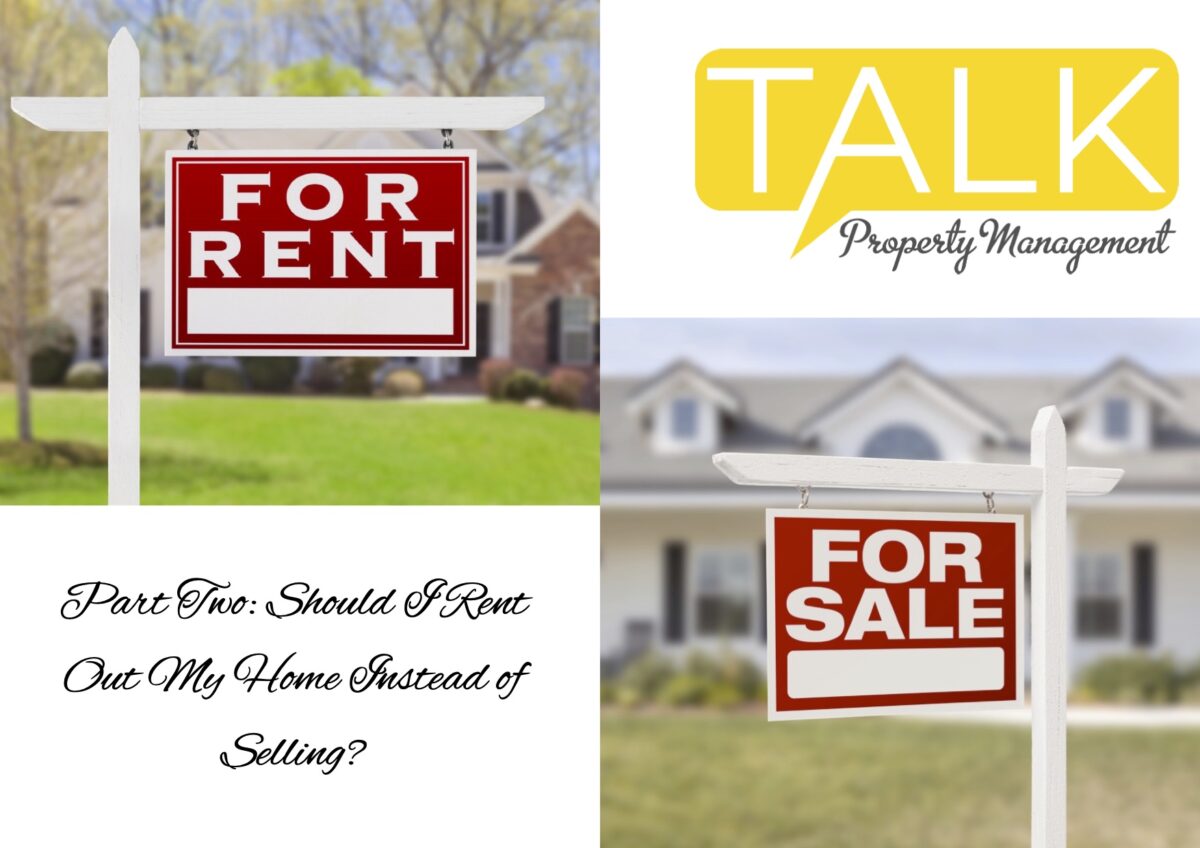
Part Two: Should I Rent Out My Home Instead of Selling?

Continuing our previous blog, we’ll discuss the pros and cons of renting or selling your home. I’ll cover the cost of renting vs selling and what costs are included in each option.

Costs

Both selling and renting have their unique costs. A key consideration is whether your rental income is enough to cover the mortgage and upkeep. To determine how much rental income you can expect to earn, compare what other similar properties are charging and subtract the cost of mortgage payments, maintenance, repairs, taxes, hiring a property manager, and additional related expenses. The answer should help you answer whether there will be a positive cash flow or not. Rental income is an opportunity for long-term cash flow, but only when it’s positive. If it’s a loss, it’s worth considering selling.


The costs to rent a home should include mortgage, home maintenance and repairs, property taxes, advertising, background and credit checks, property management fees, tax filing and accounting fees, HOA fees, landlord insurance, and vacancies. Now let’s break down each of those. 


Mortgage: While someone else is living in your property, it is still your responsibility to pay the mortgage. To find average rent prices, you can research what other properties are advertising. This can be done through online research or by your real estate agent. 

Home maintenance and repairs: You have to keep up with routine maintenance, so it’s liveable for tenants. The rule of thumb is to save at least 1 percent of the home’s value every year to pay for maintenance. You’ll also need to budget for extra repairs and replacements of essential home parts like appliances, doors, windows, and the roof. 

Property taxes: Taxes will vary on the property’s location, but expect the rate to increase as your home value increases too. Any income you make from your rental property is subject to rental income taxes. You’ll be taxed at your ordinary tax rate but can write off certain expenses. If you rent your property for three years or more, it is no longer your primary residence. This means any profit made before selling is subject to a capital gains tax. Consult your tax advisor for recommendations regarding your specific situation.

Advertising: You need to get the word out about your property to find tenants. Advertising costs vary depending on what source you use. Advertising can range from social media ads and websites to working with a real estate agent to market the property. 


Background and credit checks: To ensure you have a reliable future tenant, you’ll need to screen them. This means running a credit and rental history report. Sometimes you can pass this expense onto the tenant, but if not, the cost ranges from $15 to $40. 

Property management fees: If you choose to hire a property manager, they usually charge a percentage of the rent price. Read my investor resources, “Why Should You Hire a Property Manager for Your Austin Investments”, “When is it Time to Hire an Austin Property Manager?”, and “Property Management During COVID-19”.

Tax filing and accounting fees: Taxes become more complicated when you own property (or several), so it’s best to hire someone to file your taxes for you.

HOA fees: If your home has a homeowner’s association, you’ll be responsible for the HOA fees too. Depending on what type of property you have, the costs can range from $25 to $1,000 or even more a month.

Landlord insurance: Landlord insurance will cover specific costs like damage to the home or if someone is injured on the property. This will usually cost about 25% more than your typical homeowner’s insurance policy. 

Vacancies: You’ll have to plan for the times when your home isn’t occupied. This will be income you’re losing. 


Now let’s discuss the cost of selling a home. The costs to factor in should be home improvement, real estate commission, home staging, utilities, home loan payoff, and closing fees. 

Home improvement: Home improvements should be made if it will increase the home’s value and fix any repairs needed. This can range from enhancing the curb appeal or removing a whole wall. It’s helpful to get a home inspection before listing to find out what you’ll need to fix beforehand. 

Real estate commission: Up to 6% of your home sales price could go to your agent. This is typically split 50/50 between the listing real estate brokerage (your agent’s brokerage) and the buyer’s agent’s real estate brokerage. The commission could be your most significant expense when selling your home. 

Home staging: Home staging isn’t always necessary, but it increases your home’s desirability and helps your house sell faster and potentially for more money. Staging costs range depending on the size and your specific needs, and it can cost anywhere from $1,000 to $8,000 or more. 

Utilities: Remember that you’ll be paying for your utility bills until the closing date. 

Home loan payoff: Once sold, you’ll need to pay off the rest of your mortgage.

Closing fees: Depending on your agreement with the buyer, you may take on some of the closing costs. Expect closing costs to be a loss of 10% of the selling price. 


Choosing an option comes down to finances, your long-term investment goals, and the real estate market. If you’re ready to sell, rent, or need professional advice regarding property management or real estate, TALK Property Management is here to help (512) 721-1094 or dbrown@talkpropertymanagement.com. 


Part One: Should I Rent Out My Home Instead of Selling?

Selling or renting is the age-old question for property owners, and there is no right or wrong answer. Let’s look at what the market is doing now and then discuss factors to consider to make the best choice for your situation. 

The Market Now

The Central Texas housing market continues to be strong for many reasons, including our high quality of life, relatively low cost of living, and even the coronavirus pandemic. 

COVID-19 has altered the way we search for homes, show homes, and buy and sell homes. It has also kept some local home sellers out of the market–those who don’t “have to” move–likely because they’re waiting for the effects of the pandemic to dwindle. That means that local demand for housing outweighs supply, so homes are selling for a higher price. This process is called a seller’s market. But, the real estate market is dynamic, and this could change at any time.

Additionally, mortgage interest rates remain at historic lows, motivating buyers to make a purchase now.

The local and national economies impact the housing market as well, so you’ll need to assess items that can increase or decrease city growth. People could be relocating for jobs, which can cause job losses and increases. Are businesses moving into the area? Are houses being fixed or abandoned? Each aspect will help you get a better understanding of where the market and economy are going. 

Lastly, rent prices have increased over the years, with an increase in Millennials and Baby Boomers demanding affordable rental housing. But, this is a trend that could change now due to the economy. 

What to Consider

Do you want to be a landlord?

Managing a property is a time consuming and challenging job. Consider if you have a team to help you, like a handyman or real estate agent, or do you need to hire them? Ask yourself if you have the time and effort to screen tenants or if you’re willing to hire a third party to do so. 

It’s essential to factor in where you’ll be living. If you’re out of state, you’ll need a property manager. If you’re staying local, then you need to know what that requires. Not only will you need the time, effort, and cash to be a landlord, you’ll need to be knowledgeable in the local, state, and fair housing laws. 

Read my owner’s resource for “5 Things You Should Know Before Becoming a Landlord”.


Are you buying another property while renting the other?

To get a second mortgage, lenders will consider rental income, usually up to 75%, to be counted as income sources. But, with low mortgage interest rates, this might be the time to refinance and pay an even lower mortgage payment. 


Will home values increase in your area?

While it’s impossible to predict the market, it’s smart to follow it to see where your home’s value could be in a few years. Suppose you expect the market to work in your favor in a few years and increase the value. In that case, you might want to consider renting it now and selling later to take advantage of the appreciation. Conversely, if you think this is the best the market will do for your house, then sell now. 

To calculate the potential return on your investment property, you’ll need to know your cash flow and equity. To read an example, read my investor resource “How to Calculate the Potential Return on Your Investment Property.” 

A cost market analysis (CMA) will help you answer what your house is worth right now. It will also help you understand the current housing market and the price of other similar properties. Get a full CMS explanation here.   


This is part one of a two-part series. In the next blog, I’ll share the specific costs of renting and selling. Check back in December for part 2! 

10 Tips for Finding A Reliable Home Contractor

A contractor is a crucial member of your investment team, so you have to make sure they’re the best and most qualified for the job. You need someone capable of keeping projects on budget and schedule. A good and reliable contractor will make your investments successful, and when a property is successful, you’ll see more money.

So here are ten tips to help you find a reliable contractor. 

1. Use a reliable source.

Ask real estate agents (hey, that’s me!) and other investors about their experiences with their contractor. This is the first source you should go to. Since they have had one on one experiences with the contractor, they’ll be able to go into specific details about the contractor and the job. Employees at hardware stores could be a source of knowledge as well. 

If you don’t have those networking connections, Angie’s List and Checkbook are reliable online services. Always check the Better Business Bureau website to ensure they’re legit and to see their score. It will show their customer reviews, customer complaints, BBB rating, and BBB accreditation. It will show you how long they’ve been accredited and an overview of the BBB rating. 

Online reviews are not replacing checking for references. Suppose there are many negative reviews over a long period. In that case, that should be a red flag but not one singular negative review.

2. Interview several contractors

Once you think you found a good match, interview them! You should interview at least five and ask lots of questions. You need someone with a specific skillset for investments. If a contractor only specializes in the kitchen or bathroom, then don’t ask them for a quote about anything outside their expertise. It’s a lot of work, so you need someone familiar with the investing process. From this interview, you’ll also be able to see the contractor’s approach, budget, timeline, and relationship with other contractors in the area.

3. Ask for references

To narrow down the choices after an interview, ask for references from previous clients. You’ll want to ask questions about how the contractor handled changes, the budget and timeline, and how they treated the job site. These are crucial answers you need before giving them your business. 

4. Ask for a formal bid or estimate.

ALWAYS review an estimate of the project’s cost before signing an agreement with a contractor. If you’re still choosing between a few, a bid could be a way to narrow it down. If you’re comparing offers, make sure each one includes the same materials and tasks, so it’s a fair comparison. In addition to the budget and timeline, talk with them about materials and possible subcontractors who might be brought on.

Acknowledge that plans change and repairs could be needed on the go, so be realistic with the bid as well. You could ask for a price with two or three scenarios and play around with what needs to be added and doesn’t. Be a smart investor and expect to spend 15% more than estimated to cover unexpected costs. 

If the price doesn’t work in your budget, you need to focus on the service they provide and then find a fair priced contractor in that subset. Cheap does not always mean a good contractor and vice versa. 

5. Verify their license.

Check that your contractor is legit and has the proper license from our local and state governments. Ask to see their license to make sure it is up to date or request a copy. 

6. Do a background check.

Again, check the BBB website for complaints and violations. Suppose your contractor doesn’t disclose legal issues before signing. In that case, you’re within your rights to ask or do the research yourself in our local court records and the Texas disciplinary board. Better to be safe than sorry, right?

7. Search for subcontractors.

Research what companies or service providers like electricians, plumbers, or carpenters your home contractor uses. Learn about this before to know more about the other vendors who will complete the project and the team.

8. Ask about insurance and permits BEFORE.

Nearly all renovating projects require a permit. So, a contractor will need to secure the proper permits, licensing, and insurance before taking a tool to anything. Find out which permits Austin, and the state of Texas require and check with your contractor. If you work without a permit, you’re violating local ordinances, and you are liable for the consequences if caught. Consequences range from fines to not having the work be inspected by the city once completed, which will cause problems when you want to sell. 

While acquiring a permit can slow down your project and be a pain, the correct permit will have your contractor following the law. A permit also confirms that a city official will inspect it to ensure it is up to code once the project is completed. It’s pretty standard for a project to start months after an agreement, too since contractors have consistent work and need to finish their current projects. 

For insurance, you’ll need to know what is covered by your homeowner’s insurance and what is covered by the contractor’s insurance. I recommend getting a copy of the contractor’s insurance policy. 

9. Draw up a contract.

Now that you have chosen a contractor, create a contract that covers the project’s details like budget, timeline, detailed list of building materials, and all subcontractors’ duties. The contract should also include ground rules like the hours for the contractor to work on the property, what kind of notice you’ll get, what bathroom workers will use, where they’ll park, and what will be cleaned up at the end of the workday. 

If something comes up during the project, ask to sign an addendum and see a new project estimate that includes new work, materials, and cost. 

10. Be smart with payment.

Naturally, contractors ask for an upfront payment that will go to their total fee before beginning work. The most common advice is not to pay more than 10% of the price for an extensive renovation project. But smaller upgrades with custom work could require a 30 to 50% upfront payment. 

Only pay the rest of the fee once the project is completed. The price should be clearly outlined in your contract. The schedule should be updated each time a problem arises or a new repair is needed.

These are my tips to help you build your investing team. But it’s essential to be realistic as well, so you’re not a “nightmare” customer for them. After all, it’s just one person or team, and they can only do so much. If you follow my tips, you should find one superhuman to help you real your investing goals! If you need a real estate agent on your investing team, I’m here to help (512) 721-1094 or dbrown@talkpropertymanagement.com. 

Photo by Milivoj Kuhar on Unsplash